Skip to content
Back to experience

Role

Project Lead · Clean energy programs

Energía Limpia Para Todos · San Cristóbal, Venezuela

I led training and renewable energy adoption programs in areas with limited access, alongside my role as production supervisor. I designed and supervised more than ten programs with tailored curricula, coordinated community teams, built partnerships with public and private entities, and defined the impact evaluation methods.

More than a hundred people completed the programs with enough technical autonomy to operate and maintain the installations.

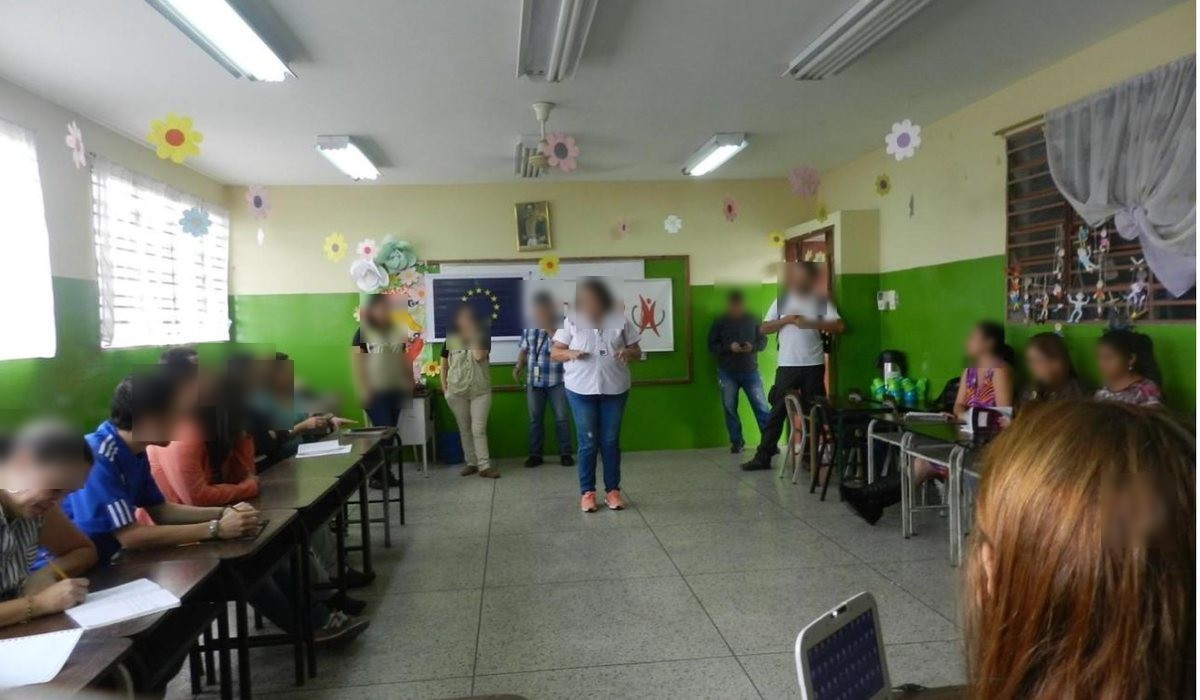
Training session
Energía Limpia Para Todos

Jul 2022 — Nov 2023

Project managementRenewablesTrainingImpact evaluation

  • People
  • Operations
100+People trainedWith autonomy to operate and maintain the installations
10+Training programsWith curricula tailored to each community
1 year 5 monthsDurationJuly 2022 to November 2023

My responsibility

Design and supervision of more than ten training programmes with adapted curricula, coordination of community teams, partnerships with public and private entities, and impact evaluation methods.

Result

More than a hundred people trained with the technical autonomy to operate and maintain the installations.

The challenge

  • Hard-to-reach areas where a maintenance visit can cost a full day of travel
  • Installing a photovoltaic system is a solved problem; keeping it running once the project is over is not
  • Groups with different starting levels: some had never used a multimeter
  • Without assessment methods, a training programme can only prove attendance

How I approached it

  1. Training as the main deliverableI shifted the goal from installing equipment to leaving the communities able to maintain it, with the installation as the medium on which to practise.
  2. Curricula adapted to each communityI built more than ten programmes around the installed equipment and the starting level of those who were going to take charge of it.
  3. Content chosen by what failsBasic sizing, preventive maintenance and diagnosis of the frequent faults: dirt on panels, battery discharge and outdoor connections.
  4. Community teams and partnershipsI coordinated teams where authority comes from agreement and built partnerships with public and private bodies for access, material and continuity.
  5. Impact evaluationI defined methods that require going back later and checking whether the installation is still in service and whether the fault appeared and was resolved locally.

Work blocks

Design of more than ten programmes

I designed and supervised the programmes with adapted curricula: the same technical content structured differently depending on the group's prior experience with electricity.

Content focused on what fails

Panels that lose output as they get dirty, batteries whose life depends on how they are discharged and outdoor connections: knowing what to check and how often.

Coordinating community teams

People who take part on top of their jobs, with variable availability and an authority that comes from agreement rather than from an org chart.

Public and private partnerships

I built partnerships with public and private bodies that solved what a programme alone could not: access, material and continuity.

Impact assessment methods

Assessing autonomy means going back later and checking whether the installation is still in service, whether maintenance was done and whether the fault was fixed locally.

01

The role

I led training and renewable energy adoption programs in areas with limited access between July 2022 and November 2023, running them alongside my role as production supervisor. The assignment was program design: what is taught, to whom, with what materials, and how you verify it worked.

The stated goal wasn't to install equipment. Installing a photovoltaic system in a community is a solved problem; having it still work two years later, once the project has ended and there's no one left to call, is not. That shift makes training the main deliverable and the installation the medium it's practiced on.
02

The training programs

I designed and supervised more than ten programs with tailored curricula. Tailored doesn't mean simplified: it means built around the equipment that community already had installed and the starting level of the people who would take charge of it. The same technical content, basic sizing, preventive maintenance and diagnosing the most frequent faults, is structured differently depending on whether the group has prior electrical experience or has never used a multimeter.

The content was chosen based on what fails in the field. Panels lose output if they get dirty, battery life depends on how they're discharged, and a loose connection exposed to the weather eventually fails. None of that requires a certified technician, but all of it requires someone who knows what to check and how often, because in areas with limited access the real cost isn't the failure but the travel: a visit that takes a morning in the city can cost a full day of travel.

03

Partnerships and impact evaluation

I coordinated community teams and built partnerships with public and private entities. A community team isn't managed like a plant team, because people take part on top of their own jobs, availability varies, and authority doesn't come from an org chart but from agreement. The partnerships solved what a program alone couldn't: access, materials and continuity.

I defined impact evaluation methods because without them a training program can only demonstrate attendance. Evaluating autonomy means going back later and checking whether the installation is still running, whether maintenance was done and whether any fault that appeared was resolved locally. By that standard, more than a hundred people completed the programs with enough technical autonomy to operate and maintain the installations.

Results and impact

Result

Over a hundred people trained

They completed the programmes with enough technical autonomy to operate and maintain the installations.

Over ten programmes

Each with a curriculum adapted to the community's equipment and to the starting level of those taking charge.

Autonomy assessed, not attendance

The criterion was going back later to check the installation, the maintenance and the local fixing of faults, instead of counting attendees.

Stack

Project managementRenewablesTrainingImpact evaluation

Skills used in the role

Frameworks and methods

Operational excellenceTeam leadershipProject managementContinuous improvement