Skip to content
Back to experience

Role

Logistics and Procurement Coordinator

Zolarzo · Texas, United States · remote

I coordinated logistics and procurement for a solar energy project company based in Texas, remotely. The responsibility covered the full flow of material: incoming and outgoing goods, stock levels, document verification, route planning, installation logistics, spare parts and after-sales service.

I implemented real-time digital tracking of tasks, crews and suppliers, which is what made it possible to cut logistics costs by fifteen percent and lead times by twenty percent. The company also trained me for eighty certified hours in energy efficiency and renewable energy.

Zolarzo
Zolarzo

Mar 2020 — Nov 2021

Supply chainRoute planningMonday.comSolar

  • Supply chain
  • Operations
  • Digitalisation
−15%Logistics costsRoute planning and shipment consolidation
−20%Lead timesFrom the warehouse to installation at the customer's home
1 year 9 monthsDurationMarch 2020 to November 2021, remote
80 hCertified trainingEnergy efficiency and renewable energy

My responsibility

Goods inbound and outbound, stock levels, document verification, route planning, installation logistics, spare parts and after-sales service.

Result

−15% in logistics costs and −20% in lead times, with real-time digital tracking of tasks, crews and suppliers.

The challenge

  • Remote coordination from day one, with no way to check the state of the warehouse by looking at it
  • A residential installation is executed: if one component is missing, the whole day is lost
  • The indicator that mattered was not the average stock level but the proportion of complete kits
  • Material was prepared once the date was already fixed and shipments went out separately

How I approached it

  1. Records instead of direct observationThe state of the warehouse had to exist in a system and be kept up to date by whoever was actually there.
  2. Real-time trackingI set up tracking of tasks, crews and suppliers; a half-updated board produces decisions about a state that is no longer real.
  3. Routes and shipment consolidationI planned the routes and grouped shipments that used to go out separately.
  4. Early preparation of materialI moved material preparation forward to the confirmation of the installation date, instead of preparing it once the date was already fixed.
  5. Product trainingI took 80 certified hours in energy efficiency and renewables to know which component can be substituted and which one determines performance.

System view

Work-in-progress tracking board
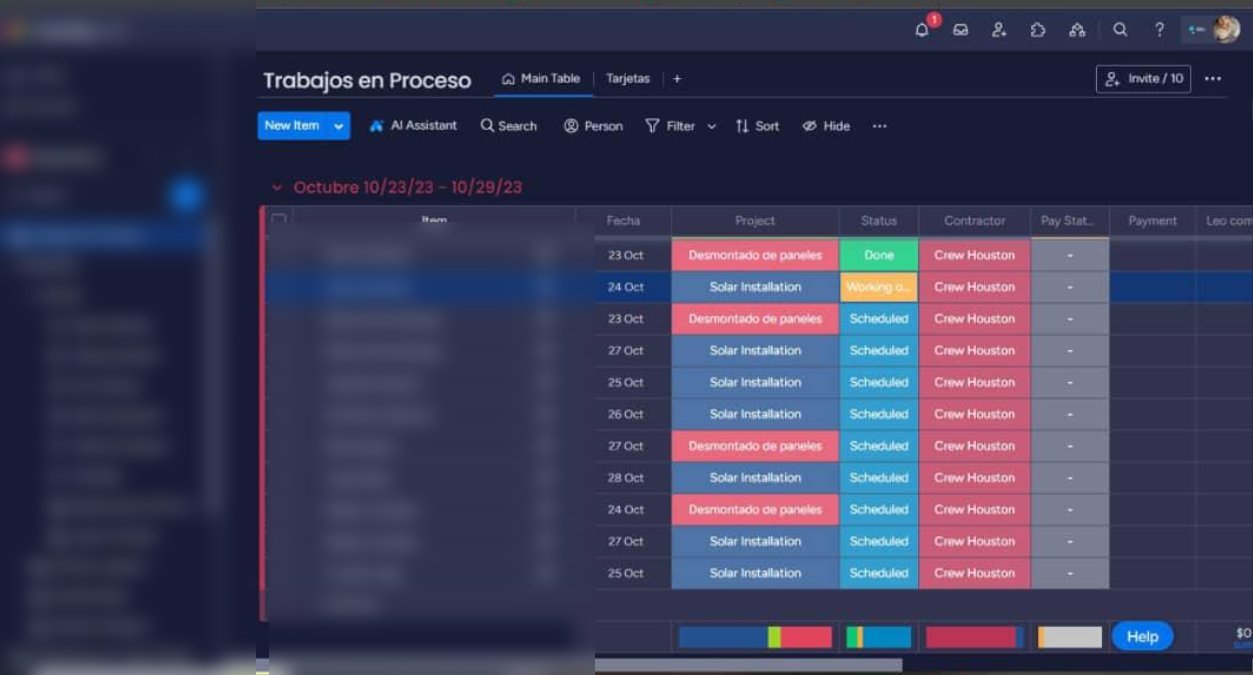
The work-in-progress board: date, type of job, status, assigned crew and payment status in a single view. Customer names have been removed.Image edited for project confidentiality: operational data has been deliberately blurred or removed.

Work blocks

Inbound, outbound and stock levels

I managed the full flow of material with the priority inverted: what mattered was the proportion of complete kits, not the average stock level.

Work-in-progress board

Date, type of job, status, assigned crew and payment status in a single view, updated by whoever was in the warehouse.

Route planning

I planned the routes and grouped shipments that used to go out separately; that is where the 15 % reduction in logistics costs came from.

Installation logistics

I moved material preparation forward to the date confirmation so that the complete kit was at the customer's home, on the day, with the crew available.

Documentation, spare parts and after-sales

The role also covered document checks, spare parts and after-sales service.

Product training

Eighty certified hours: energy efficiency and solar energy in January 2021 and renewable energies in May, so as not to make decisions that were formally correct and technically poor.

01

The role

Zolarzo installs solar energy at homes in Texas. I joined in March 2020 as logistics and procurement coordinator and left in November 2021. The role was remote from day one, and that condition wasn't an organizational detail but the constraint that defined how the work had to be done.

A residential solar installation isn't delivered, it's carried out. The materials have to be complete at a specific home, on a specific day, with a crew available: if a component is missing, you don't deliver part and finish later, you lose the whole day. That reverses the warehouse's usual priority, because the metric that matters isn't average stock level but the proportion of complete kits.
02

Digital tracking of the operation

Work-in-progress tracking board
The work-in-progress board: date, type of job, status, assigned crew and payment status in a single view. Customer names have been removed.Image edited for project confidentiality: operational data has been deliberately blurred or removed.

Coordinating a physical operation remotely means replacing direct observation with a logging system. I couldn't check the warehouse's status by looking at it, so that status had to exist somewhere and be kept updated by whoever was actually there.

I implemented real-time tracking of tasks, crews and suppliers. The choice of tool mattered less than the discipline of logging: a board that's only half updated is worse than no board, because it leads to decisions made on a status that's no longer real.

03

Where the two figures came from

The fifteen percent reduction in logistics costs came from route planning and from grouping shipments that used to go out separately. The twenty percent in lead times came from preparing materials ahead of the installation date being confirmed, instead of preparing them once the date was already set.

Neither is a sophisticated optimization, and both depend on having the operation's actual status in view. The tool didn't produce the savings: it made visible where they were.

04

Training within the company

Energy efficiency and solar energy certificate
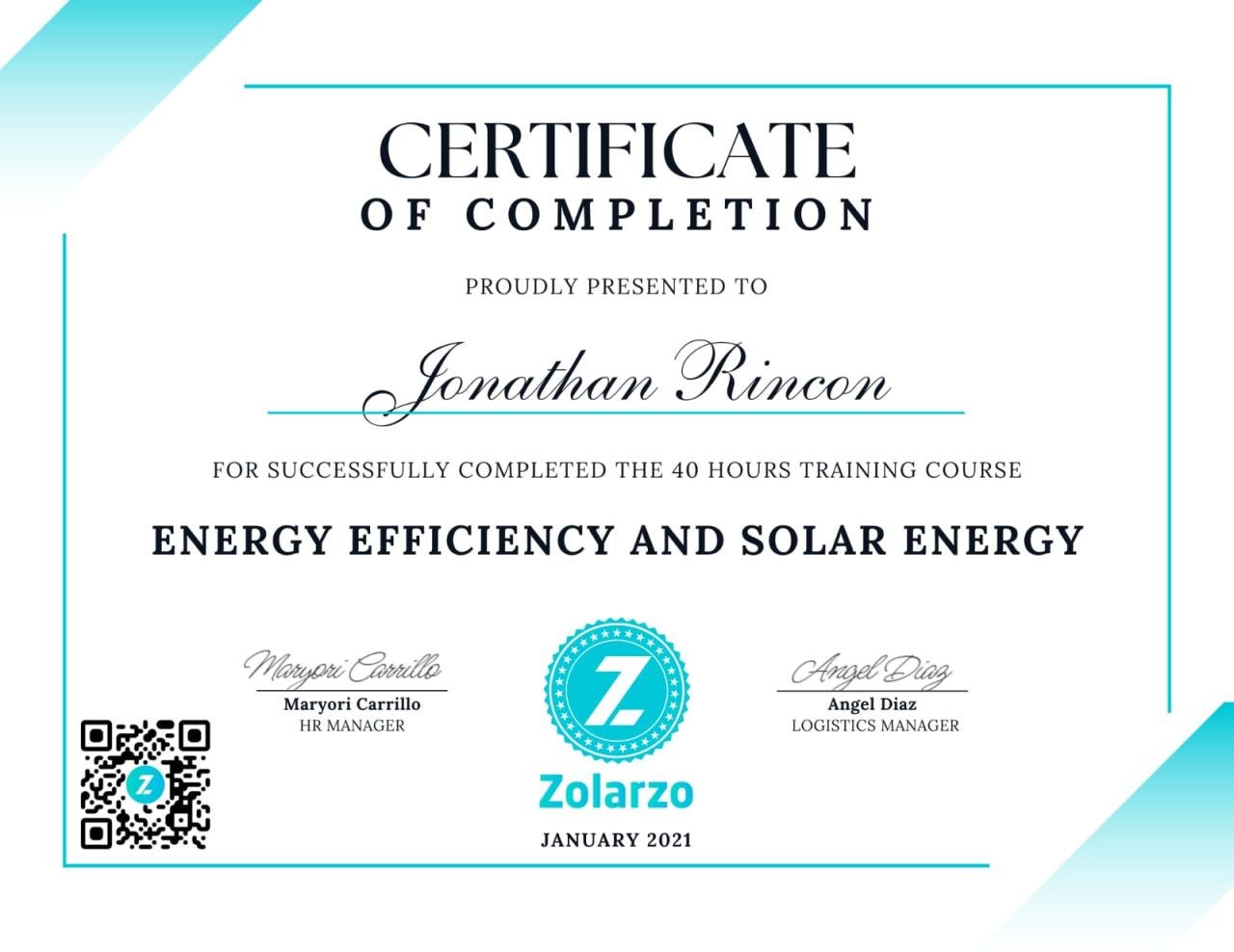
Energy efficiency and solar energy, forty hours, January 2021.
Renewable energy certificate
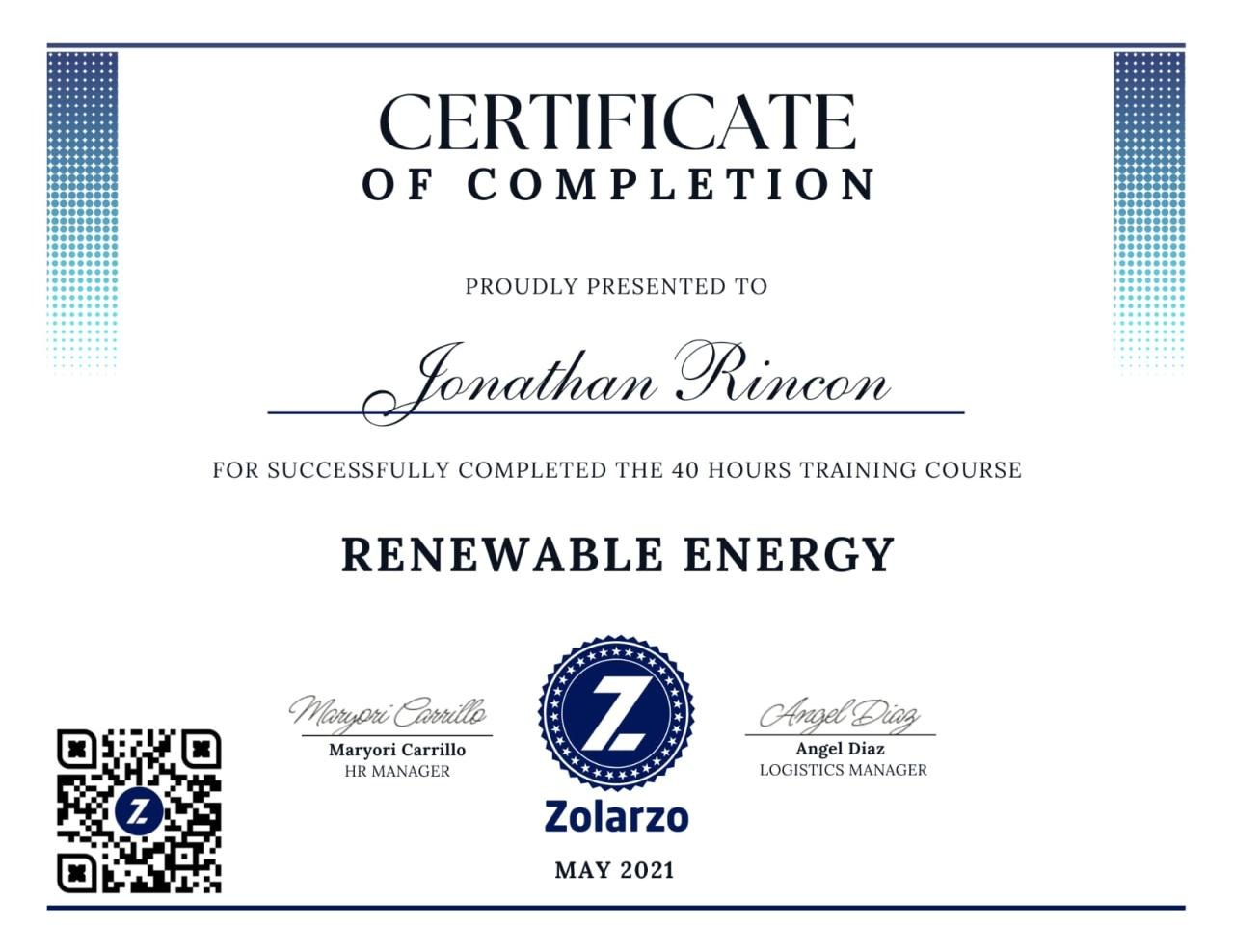
Renewable energy, forty hours, May 2021.

Zolarzo trained me in its own technical domain with forty hours of energy efficiency and solar energy in January 2021 and forty hours of renewable energy in May of the same year.

Coordinating the logistics of a product without understanding the product leads to decisions that are formally correct and technically bad. Knowing which component can be substituted, which one determines the installation's performance and which one can't be stored just any way changes procurement priorities.

Results and impact

Result

−15 % in logistics costs

From route planning and the grouping of shipments that used to go out separately.

−20 % in lead times

From warehouse to installation at the customer's home, by moving material preparation forward to the date confirmation.

Real state of the operation in view

Real-time tracking of tasks, crews and suppliers made visible where the savings were; neither of the two improvements was a sophisticated optimisation.

80 h of certified training

Zolarzo trained me in its own technical domain: forty hours in January 2021 and forty in May of the same year.

Stack

Supply chainRoute planningMonday.comSolar

Skills used in the role

Tools

Monday.com

Domain

Inventory managementLogistics managementSupply chain managementRFID

Frameworks and methods

Project management